why shouldn't i be 'disgustingly' educated?
it is that deep, the disgust was never ironic

this post is motivated by this substack, titled "stop calling yourself disgustingly educated." ivy league, pinterest, substack, rhode lip tints and cakes with white icing – these contexts are not universal.
toggle for the substack essay's arguments/summary
the linked substack article talks about the term disgustingly educated and more specifically its aesthetic use in online pop-discourses. the fact that it's been made into a consumer effect. it has three dimensions:
(i) the term packages intelligence with physical beauty and a specific shopping list (black turtleneck, ralph lauren sweater, dark navy jeans, oxfords, "office siren" glasses);
(ii) creates a synthetic urgency around reading quotas rather than something genuine around intellect;
(iii) paradoxically reinforces anti-intellectualism (special focus on today's age of anti-intelligence) by framing deep thinking as excessive or repulsive
covering how the term subverts itself into a buzzword territory and why it fails its own revolutionary potential, the rhetorical moves the author makes is especially highlighted by the example of the queen's gambit chess set sales spike as evidence of aestheticized intellectualism. they call the disgustingly educated outfit a larp, and end by telling their readers to delete their goodreads and just sit with themselves. (why not substack too?)
i would have liked to see a banner attached to accept that the ref substack essay is written from a narrow scope of concerns, for a narrow experience. and there's nothing wrong with that. the article got it partially right for a partial world.
this morning, my friend and i were at a coffee shop in the university neighborhood. we're both second year phd students in english, and we had an overambitious todo list in front of us: emails to respond to, a letter to write, conference stuff, papers stuff. at the table beside us, two white men were talking. one of them said that a phd in english is like an associate's degree. we continued with our work in their background.

it'll be naive to call it a dismissive comment. it was a specific kind of contempt for a very specific type of intellectual labor. that man is not on substack and pinterest, he's on that table performing disgust that's not for a bigger audience. casual, ambient, social. it is for ears that will listen, say nothing, and move on. the author's critique of "disgustingly educated" is not wrong; the aestheticisation is real, the shopping list is real, the pinterest mood board is real. but the argument rests on a single, unexamined assumption: that the disgust in the phrase is self-imposed and a pose. something you can have control over to stop performing.
i. genealogy
18th century england. men and women who met in groups to talk about intellectual ideas outside their domestic domains were called bluestockings; it wasn't a compliment, but eventually it became a slur. in the 19th century, when advocacy for female education (and authorship) was gaining space, the society pushed back.
that's when the term 'bluestockings' took a derogatory shift, focusing on educated women, implying that intellectual pursuits were undesirable in women. a way of marking, branding the intellectual community of women as a social deviance, something slightly socially grotesque. because, afterall, the 'spread' of education was now a contamination. today, the word has been reclaimed.

this is an affective disgust. jonathan haidt's work on moral emotions argues that disgust evolved as a contamination response (rotten food, disease, threat of corruption entering the body; body). this gets recruited into moral and social policing quite smoothly if you ask me. what contaminates the body and what contaminates the social order begin to feel like the same thing. contaminating the body and contaminating the social order overlap. the woman who thinks too much, gathers too much with other thinking women, refusing her prescribed limits, inviting and motivating others: she triggers the same response as something rotten. not merely wrong, but repulsive.
by the 19th century, this response was institutionalized as 'science'. edward clarke made the medical case explicitly. he argued that the brain and the uterus competed for the same blood supply. thus, a woman who studied too hard diminished the very vital resources away from her reproductive organs toward her mind. which means (in a very simple manner of deduction) education is not just unfeminine, but biologically catastrophic. disgust now had a stylish biological protective wear!
ii. freud
i love psychoanalysis, it is one of my favorite literary fields, and it is precisely because i love it, i have to bring in freud and his ridiculousness here. by the time he is writing dora's case study in 1905, he's not inventing the women intellectual resistance (as a symptom) argument, it has been medicalized for a few decades (since the 1870s).
dora is 18 and she comes to freud having already done her own interpretation of her situation, accurately too: the conflict revolved around her father's affair with frau k, and frau k's husband making unwanted sexual advances toward dora. she said she is being bartered between her father and herr k, traded as a social convenience.
freud's response? to diagnose (and dismiss) her resistance as hysteria. her intelligence? a symptom of repression. her refusal to accept his interpretation? evidence of her pathology. the girl who thinks, who interprets, who refuses is not right. in fact, she is sick and must not be believed.
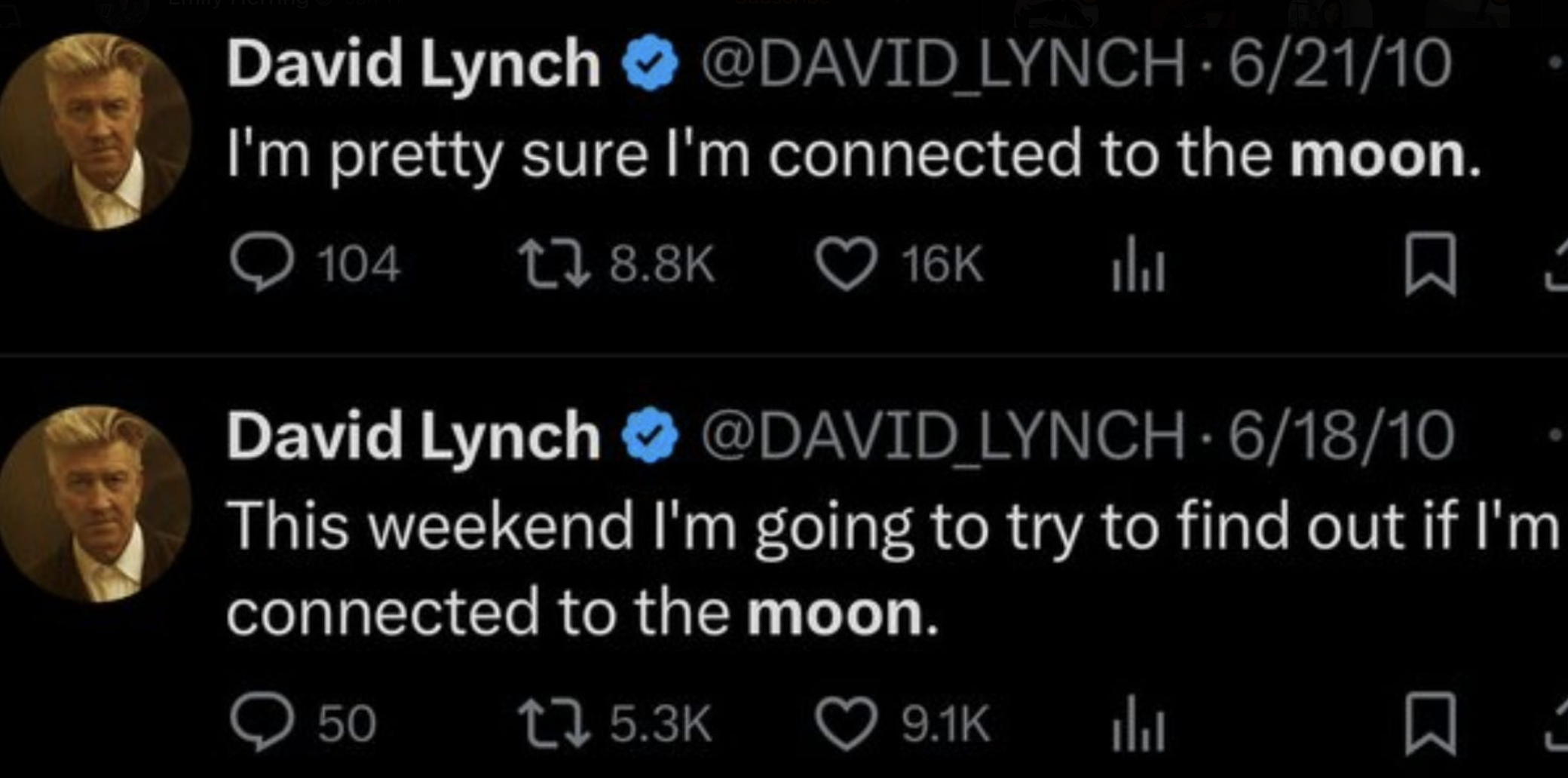
it is worth talking about what freud did with dora after she walked out of his office. she terminated the analysis abruptly, which freud noted as another symptom, another resistance. he wrote the case study anyway, publishing her private life.
the case study is a remarkable document of self-justification because while freud admits that the treatment was incomplete, he frames her departure as the most interesting part. it is structured around his theories while overriding her theories (which, too, he makes a note of as something that can be neglected and why). at one point she corrects him, and he records the correction as further evidence of her pathology. the document is less a record of a patient than a record of a man watching a girl think and deciding that the thinking itself is the problem. that this document became a cornerstone of psychoanalytic literature tells you something about whose interpretations get to be foundational.
iii. wide sargasso sea
jean rhys understood what happened to dora. wide sargasso sea is what happens when nobody writes the case study and when the woman is simply handed over to a man who refuses to read her. antoinette cosway is not mad; she is unreadable to rochester. which is a different thing entirely. her interiority, her knowledge of her own landscape, her desires: these are all unintelligible to him, and what's illegible becomes monstrous.
he renames antoinette as bertha, locks her in an attic. sure, rochester is an asshole, but he is also an echo of a structural systemic imagination. the woman whose mind exceeds what the man beside her can contain will be diagnosed, renamed, enclosed.
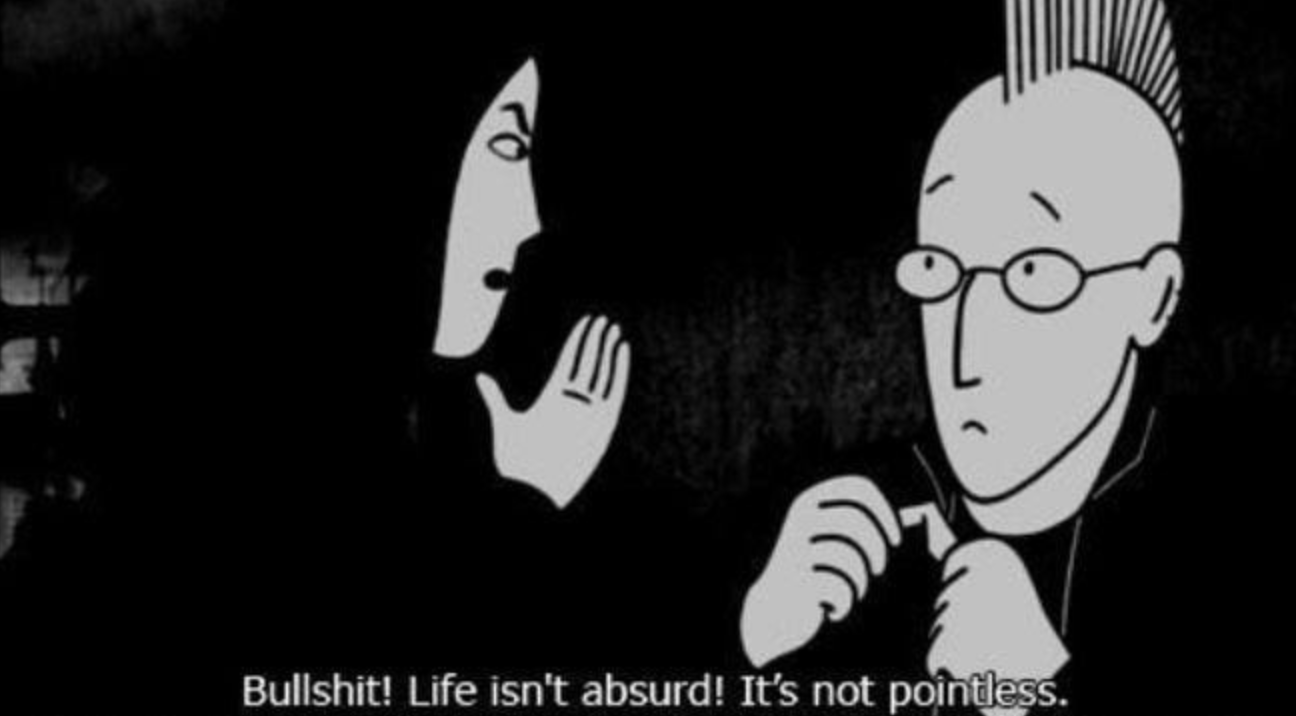
antoinette's illegibility is not only gendered. she is a creole woman, and rochester arrives in her landscape with no framework for it and no interest in really acquiring on. (thus my aside on why the substack should have had an anchor culturally). her knowledge (of plants, people, light, language) is something he cannot read, and what he cannot understand, he destroys. rhys knew this from the inside.
iv. mary wollstonecraft
finally, this section won't be complete without mary wollstonecraft. she wrote a vindication of the rights of woman in 1792. her argument was plain, beautiful and forceful: that women's minds were equal to men's and that their education should reflect that. she died, and her husband (godwin), who loved her dearly, published her writings. but also, he disclosed: her illegitimate child, her affairs, her suicide attempts. he thought he was honoring her life but he instead destroyed her.
for nearly a century after it, her intellectual legacy was buried, spraypainted over, by the moral contamination of her private life. the argument did not fail on its own merits of course, had nothing to do with it really. but it was made untouchable by the affect that haidt would later name and theorize, because a key point of his is that disgust bypasses rational arguments entirely – disgust doing its work so effectively that it did not even need an enemy. it only needed a loving husband and a printing press.
v. the internet
the disgust hasn't gone anywhere, but it has new fashionable clothes now. costume, even. it is a pronounced age of anti-intellectualism, one in which fields are to justify their existence in economic terms. market value. the english phd as associate's degree is not an isolated comment, it is an ambient verdict, delivered daily, in coffee shops, dinner tables, policy decisions, my own university's defunding. which means redirection of students toward more legible, more profitable fields of knowledge.

it is in this climate that the substack article arrives. and the author is not wrong that the aestheticization of intellect is a real problem. but there is something uncomfortable about the conclusion they reach. in an age that is already hostile to deep thinking, already suspicious of the woman who reads too much (or their ridicule that comes in the face of mocking booktok, knitting, and more female-dominated spaces), already quick to diagnose intellectual ambition as excess or affectation — to tell people to stop calling themselves disgustingly educated, to delete their goodreads, to just sit with themselves, is to pull the ladder up at a curious moment. i agree with their diagnosis of aestheticised aestheticised intellectuality, but there's another dimension if you want to title it "stop calling yourself disgustingly educated" and want to go into the world disgust.
the aesthetic may be hollow. but the impulse underneath it is not. people are reaching for a word that names something real: that their pursuit of knowledge is legible to some as repulsive. the author wants them to drop the word. they ask why they needed it in the first place, but then abandons the question in favor of the aesthetic critique.
it is more than reclaiming
reclaiming kinda implies that something was taken and can now be returned. but the disgust was never taken away. it is everywhere, the examples are there in my section v. the aesthetic and social, both versions coexist; collapsing them into each other, as the substack article does, loses something important.
so when someone calls themselves disgustingly educated, they may not be reclaiming anything. they may be naming something that was never not true — that their desire to know things has always been, to someone, repulsive. that the pursuit of knowledge in a woman's body, in a body that is not western or wealthy or legible to the institutions that decide what counts as real education, has always carried this charge. the word is not a costume. it is a record.
to be disgustingly educated is to be in a lineage. not the pinterest lineage of turtlenecks and longchamp bags, but the lineage of dora who interpreted correctly and was diagnosed anyway. of antoinette who knew her own landscape and was renamed. of wollstonecraft who made the argument and was buried under her own private life. of every bluestocking gathering that was made into a slur because women thinking together was indistinguishable, to the people who feared it, from contamination.
the men at the table will deliver their verdict. you will continue with your work in their background. that is not reclaiming. that is the thing itself.

thanks for reading!!! <3 a long one today, but it was an amazing day of writing. to finish, here are some resources/links you can read further if you are interested:
as previously mentioned, my article responds to this substack article
on bluestocking history
- the britannica page
- "on bluestockings and beauty: 19th century advice for educated women"
haidt
- the emotional dog and its rational tail: a social intuitionist approach to moral judgment
edward clarke
- sex in education (full text)
- edward hammond clarke and the chance for girls
on dora
- fragment of an analysis of a case of hysteria (full text)
- the wiki page
on wollstonecraft
- a vindication of the rights of woman (full text)
on wide sargasso sea
- postcolonial rewriting in wide sargasso sea
academic reads:
- a vindication of the rights of woman by mary wollstonecraft
- wide sargasso sea by jean rhys
- the cultural politics of emotion by sara ahmed
- freud's dora case study (alongside hélène cixous' portrait of dora)
- the bluestocking circle by sylvia harcstark myers